

Understanding measurement conversions is essential in many areas of daily life, from construction and engineering to home improvement and crafting. One of the most commonly searched conversions is 12mm to inches because people often work with both metric and imperial measurement systems. While millimeters are widely used across much of the world, inches remain standard in several countries and industries. Knowing how to convert measurements accurately helps prevent errors, improves communication, and ensures precision in projects. This guide explores the conversion of 12mm to inches, its practical applications, and why understanding measurement systems remains valuable in modern life.
What Does 12mm to Inches Mean?
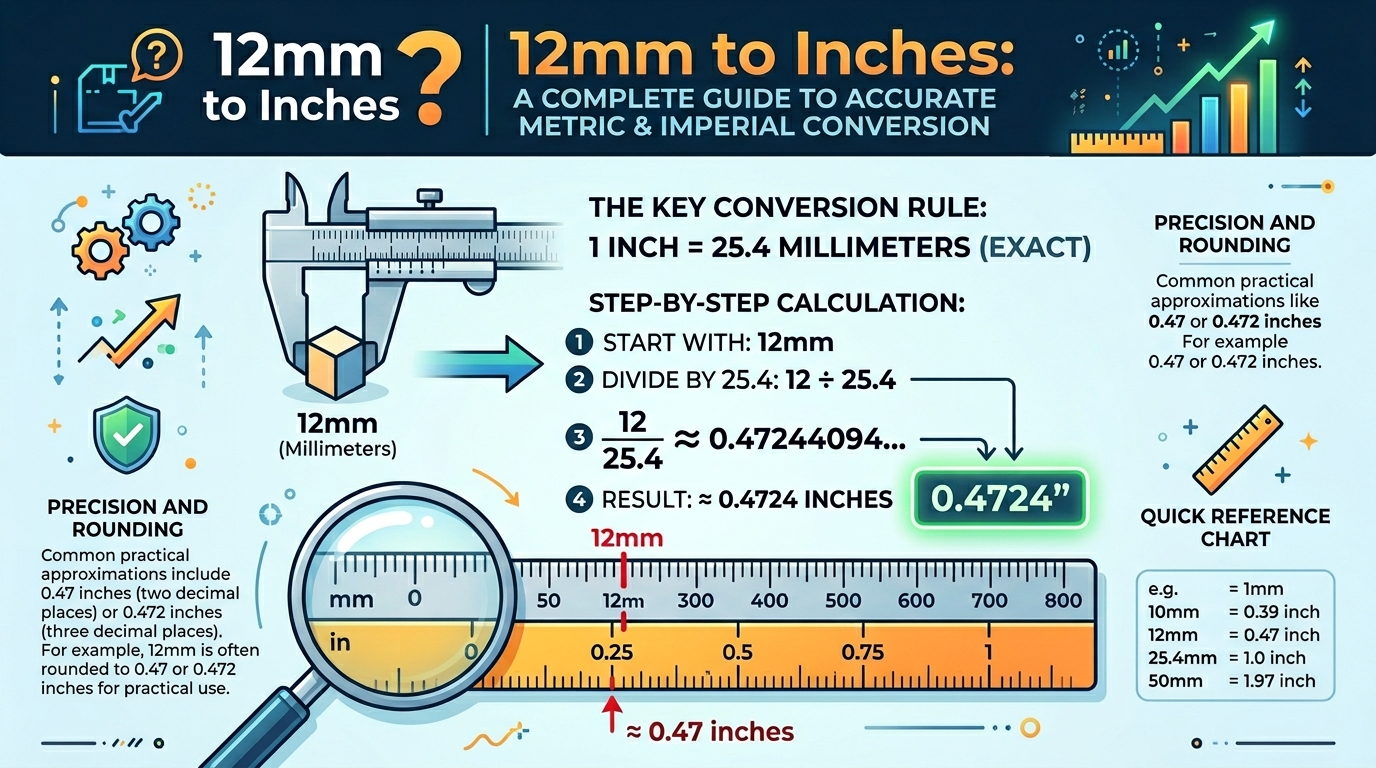
The conversion from 12mm to inches involves changing a measurement from the metric system into the imperial system. Since one inch equals 25.4 millimeters, dividing twelve millimeters by 25.4 provides the equivalent value in inches. The result is approximately 0.472 inches. This conversion is useful whenever measurements must be understood across different standards. Many products, tools, and technical documents include dimensions in either millimeters or inches, making conversion knowledge important. Understanding what 12mm to inches represents helps users interpret measurements accurately and ensures consistency when working across industries, countries, or projects that use different systems.
Why Measurement Conversions Are Important
Measurement conversions play a critical role in ensuring accuracy and compatibility. Whether someone is assembling furniture, purchasing equipment, or reviewing technical drawings, dimensions must be clearly understood. The conversion of 12mm to inches demonstrates how even small measurements require precision. Misunderstanding units can lead to costly mistakes, incorrect purchases, or construction errors. Professionals in engineering, manufacturing, and design frequently switch between metric and imperial measurements, making conversion skills highly valuable. By understanding both systems and their relationships, individuals can work more confidently and efficiently while reducing the risk of confusion when interpreting measurements from various sources.
Understanding the Metric System
The metric system is one of the most widely used measurement systems in the world. It is based on units that increase and decrease by powers of ten, making calculations straightforward and consistent. Millimeters are commonly used for precise measurements because they allow small dimensions to be expressed clearly. When converting 12mm to inches, understanding the metric foundation helps users appreciate the simplicity of the system. Industries such as science, medicine, manufacturing, and engineering rely heavily on metric units due to their standardization. This widespread adoption makes metric measurements an important part of global communication and technical work.
Understanding the Imperial System
The imperial system remains widely used in several countries, particularly in industries where inches, feet, and yards are traditional measurement standards. Inches are commonly used for household projects, construction work, and product specifications. When converting 12mm to inches, individuals bridge the gap between metric and imperial systems. Although the imperial system may seem less straightforward because it does not follow a decimal structure, it remains deeply integrated into many applications. Understanding both measurement systems improves versatility and enables smoother communication between people, businesses, and industries that rely on different standards for dimensions and specifications.
Common Uses of the 12mm Measurement
A 12mm measurement appears in many practical situations. It may represent the diameter of a bolt, the thickness of a material, the size of a tool component, or a dimension within mechanical equipment. Converting 12mm to inches becomes useful when products manufactured in metric regions are used in countries that prefer imperial measurements. Home improvement enthusiasts, technicians, mechanics, and designers often encounter dimensions around this size. Understanding the conversion allows users to compare measurements accurately and select appropriate tools or materials. Even small dimensional differences can influence the success of a project, making precise conversion an important skill.
Conversion Accuracy and Precision
Accuracy is essential whenever measurements are converted between systems. The conversion of 12mm to inches produces approximately 0.472 inches, but the required level of precision may vary depending on the application. For casual use, a rounded figure may be sufficient. However, technical industries often require more precise decimal values to ensure exact specifications. Manufacturing processes, engineering designs, and scientific calculations rely on highly accurate measurements to maintain quality and consistency. Understanding the importance of precision helps users determine when a simple approximation is acceptable and when detailed calculations are necessary to achieve reliable and professional results.
Digital Tools for Measurement Conversion
Technology has made measurement conversion faster and more convenient than ever before. Online calculators, mobile applications, and digital design software can instantly convert 12mm to inches with high accuracy. These tools eliminate manual calculations and reduce the possibility of human error. Professionals frequently use digital conversion tools when working with technical documents or international projects. Despite the convenience of technology, understanding the basic conversion process remains valuable. Knowing how measurements relate to one another helps users verify results and build confidence in their calculations. Digital resources are most effective when combined with a solid understanding of measurement principles.
Industries That Depend on Conversions
Many industries depend on accurate measurement conversions every day. Manufacturing companies often produce components according to metric standards while serving customers who use imperial measurements. Construction projects may involve materials sourced from different countries, requiring frequent conversions such as 12mm to inches. Automotive, aerospace, engineering, and design sectors also rely heavily on measurement accuracy. Even retail businesses must provide product dimensions in formats that customers understand. Conversion knowledge supports international trade, technical collaboration, and product compatibility. As global markets continue expanding, the ability to work comfortably with both metric and imperial units becomes increasingly important.
Learning Measurement Skills for Everyday Life
Understanding measurement conversions is not limited to professionals. Everyday consumers also benefit from knowing how to convert dimensions accurately. From selecting furniture and tools to understanding product specifications, conversion skills simplify many purchasing decisions. The example of 12mm to inches highlights how a single measurement can appear in numerous practical contexts. Developing familiarity with both metric and imperial units improves confidence when reading labels, instructions, and technical information. As people encounter products and information from around the world, measurement literacy becomes a useful life skill that enhances convenience, accuracy, and informed decision-making.
Conclusion
Converting 12mm to inches is a simple yet valuable measurement skill that supports accuracy across countless applications. With twelve millimeters equal to approximately 0.472 inches, this conversion helps bridge the gap between metric and imperial systems. Understanding measurement relationships improves communication, reduces errors, and increases confidence when working with dimensions. Whether for professional projects, educational purposes, or everyday tasks, conversion knowledge remains highly practical. As global interactions continue expanding, the ability to interpret and convert measurements effectively will remain an essential skill for individuals and industries alike.