

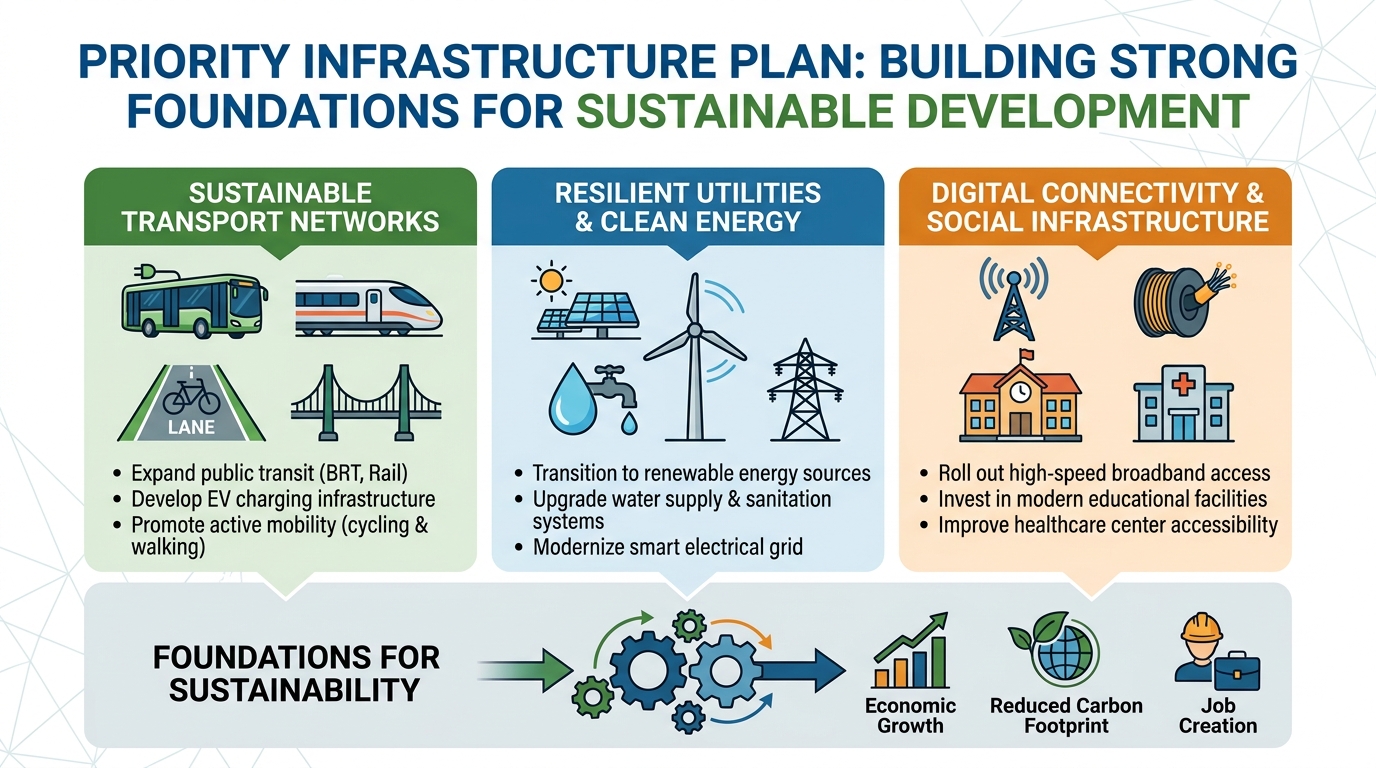
Understanding the Purpose of a Priority Infrastructure Plan
The main objective of a priority infrastructure plan is to identify and organize projects that deliver the greatest economic and social value. Rather than investing without direction, governments and planning authorities evaluate community needs, available resources, and future demands before selecting initiatives. This structured approach ensures that funding supports projects capable of improving transportation, utilities, communication, and public facilities. Careful planning also reduces unnecessary spending and project delays. By establishing clear priorities, policymakers create a practical framework that encourages coordinated development while maximizing benefits for businesses, residents, and future generations.
How Infrastructure Planning Supports Economic Growth
Economic development often depends on reliable infrastructure that enables businesses to operate efficiently and communities to access essential services. A priority infrastructure plan encourages investment by improving roads, ports, rail systems, energy distribution, and digital networks that support commercial activity. Better infrastructure reduces transportation costs, shortens delivery times, and strengthens supply chains. Investors are more likely to establish operations in regions with dependable public facilities and modern connectivity. As economic activity expands, employment opportunities increase, local industries grow, and governments generate additional revenue that can be reinvested into future development projects.
The Importance of Long-Term Strategic Vision
Developing infrastructure requires significant financial commitment and years of planning, making long-term vision essential for successful implementation. A priority infrastructure plan considers population growth, technological advancement, environmental concerns, and future economic trends when identifying major projects. This forward-looking approach helps prevent outdated investments while supporting adaptable and resilient systems. Strategic planning also improves coordination between government agencies, private investors, and local communities. By anticipating future requirements instead of reacting only to immediate challenges, planners create infrastructure capable of supporting sustainable development and evolving public needs over extended periods.
Balancing Regional Development and Resource Allocation
An effective priority infrastructure plan promotes balanced regional growth by directing investment toward areas requiring improved services and economic opportunities. Concentrating all resources in major urban centers may widen inequalities, while strategic regional investment encourages broader national development. Infrastructure improvements in underserved communities can stimulate business expansion, attract skilled workers, and increase access to education and healthcare facilities. Fair resource allocation also strengthens public confidence in planning processes and encourages inclusive growth. By considering geographic diversity, authorities help ensure that development benefits reach both established cities and emerging regions.
Sustainability in Modern Infrastructure Planning
Environmental responsibility has become a central consideration when preparing any priority infrastructure plan. Sustainable design principles encourage energy efficiency, reduced emissions, responsible land use, and climate resilience throughout project development. Renewable energy systems, environmentally friendly transportation solutions, and improved waste management infrastructure contribute to long-term ecological protection while supporting economic objectives. Planning authorities increasingly evaluate environmental impacts alongside financial performance before approving major investments. Integrating sustainability into infrastructure decisions helps create healthier communities, protects natural resources, and ensures future generations inherit systems capable of supporting continued growth without unnecessary environmental harm.
The Role of Technology in Infrastructure Development
Technological innovation continues to transform how infrastructure projects are designed, managed, and maintained within a priority infrastructure plan. Advanced data analysis, digital mapping, smart sensors, and predictive maintenance systems improve project accuracy while reducing operational costs. Intelligent transportation networks and automated utility monitoring also enhance service reliability for businesses and residents. Technology enables planners to make evidence-based decisions using real-time information that identifies emerging needs and performance trends. As digital capabilities continue expanding, infrastructure planning becomes more efficient, transparent, and adaptable to changing economic and environmental conditions.
Challenges in Implementing Infrastructure Priorities
Although a priority infrastructure plan provides strategic direction, implementation often involves financial, political, and technical challenges. Budget limitations may delay important projects, while changing government priorities can affect long-term continuity. Complex approval processes, environmental reviews, and land acquisition issues sometimes extend construction timelines beyond initial expectations. Coordination between multiple agencies and private partners also requires effective communication and clear governance structures. Addressing these challenges demands careful planning, stakeholder collaboration, and ongoing evaluation to ensure infrastructure investments remain aligned with public interests and deliver measurable long-term value.
Measuring Success and Community Impact
Evaluating the effectiveness of a priority infrastructure plan involves examining both economic outcomes and improvements in everyday life. Successful projects enhance mobility, reduce service disruptions, strengthen public safety, and create opportunities for business development. Performance indicators such as employment growth, transportation efficiency, infrastructure reliability, and environmental sustainability help measure overall impact. Community feedback also provides valuable insight into whether investments meet local expectations and practical needs. Regular assessment enables planners to refine future strategies while ensuring public resources continue supporting projects that generate meaningful and lasting benefits.
The Future of Priority Infrastructure Planning
Future approaches to infrastructure planning are expected to emphasize resilience, digital transformation, and integrated development across multiple sectors. Climate adaptation, renewable energy expansion, advanced communication systems, and smart city technologies will likely shape the next generation of projects included in a priority infrastructure plan. Collaboration between governments, private investors, and research institutions may increase innovation while improving funding opportunities. As societies face evolving environmental and economic challenges, flexible planning methods will become increasingly important. Forward-thinking infrastructure strategies will continue supporting sustainable growth while preparing communities for changing global conditions.
Conclusion
A priority infrastructure plan provides the strategic foundation necessary for building stronger economies, improving public services, and supporting sustainable development. By identifying essential projects, allocating resources wisely, and incorporating long-term planning principles, decision-makers can create infrastructure that benefits businesses and communities alike. Technological innovation, environmental responsibility, and balanced regional investment further strengthen the effectiveness of these plans. As future demands continue evolving, well-designed infrastructure strategies will remain essential for promoting resilience, encouraging economic opportunity, and ensuring that development delivers lasting value for current and future generations.