

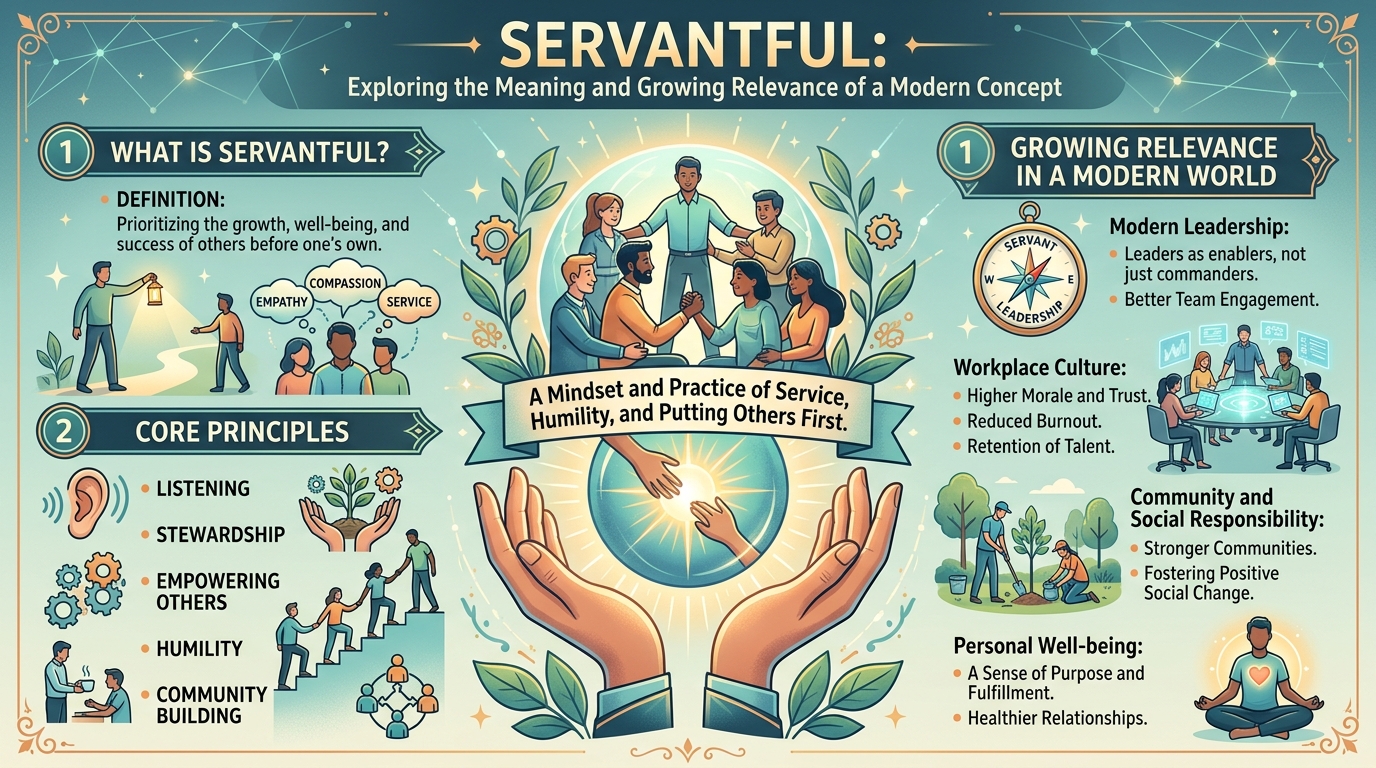
Understanding the Meaning of Servantful
The term appears to represent an approach focused on serving others while maintaining integrity, accountability, and mutual respect. Rather than implying weakness or submission, it emphasizes thoughtful actions that benefit individuals, teams, and communities. A servantful mindset often involves listening carefully, offering meaningful support, and contributing positively to shared goals. In both personal and professional settings, this perspective encourages cooperation instead of competition and values long-term relationships over short-term gains. As interest in ethical leadership grows, the concept continues attracting attention among those seeking balanced and people-centered approaches.
How Servantful Thinking Applies to Leadership
Leadership styles have evolved significantly, with many organizations recognizing the importance of empathy and collaboration alongside strategic decision-making. A approach encourages leaders to prioritize the development and well-being of their teams while creating environments where everyone feels valued and respected. This philosophy promotes trust by demonstrating genuine concern for employee success and encouraging open communication. Rather than relying solely on authority leaders inspire commitment through guidance, support, and shared purpose. Such leadership often strengthens organizational culture and contributes to sustainable growth by empowering individuals to perform at their highest potential.
The Connection Between Servantful Values and Teamwork
Strong teamwork depends on communication, trust, and a willingness to support collective objectives. A servantful attitude naturally aligns with these principles by encouraging collaboration instead of individual recognition. Team members who adopt this perspective actively help colleagues, share knowledge, and contribute to problem-solving without expecting immediate rewards. This cooperative environment reduces unnecessary conflict while increasing productivity and morale. Organizations that encourage behaviors often experience stronger relationships among employees and improved project outcomes because individuals understand that success depends on shared effort rather than isolated achievement or personal competition.
Why Empathy Is Central to a Servantful Mindset
Empathy plays a vital role in building meaningful relationships and creating supportive environments where people feel understood and respected. A servantful perspective relies heavily on the ability to recognize the needs, concerns, and aspirations of others before making decisions or offering assistance. By considering different viewpoints, individuals improve communication and reduce misunderstandings in both personal and professional interactions. Empathy also strengthens leadership by helping managers respond thoughtfully to challenges faced by employees or clients. When combined with practical action, servantful values encourage cooperation, compassion, and lasting positive influence across diverse communities.
Servantful Practices in Everyday Life
The concept of servantful behavior extends beyond workplaces and leadership positions into ordinary daily experiences. Small actions such as offering guidance, volunteering time, listening attentively, or supporting neighbors reflect principles associated with serving others respectfully. Families, schools, and local communities all benefit when individuals prioritize kindness and shared responsibility without expecting recognition. These habits strengthen relationships and encourage trust among people from different backgrounds. Adopting servantful practices consistently can create environments where cooperation becomes natural, helping communities address challenges more effectively while fostering stronger personal and social connections over time.
The Role of Servantful Principles in Business Success
Businesses increasingly recognize that long-term success depends on strong relationships with employees, customers, and stakeholders. A servantful philosophy encourages organizations to focus on value creation, ethical behavior, and meaningful customer experiences instead of concentrating exclusively on financial outcomes. Companies embracing these principles often invest in employee development, transparent communication, and social responsibility initiatives that strengthen public trust. Customers also appreciate organizations demonstrating genuine commitment to service and integrity. As markets become more competitive, servantful business practices can differentiate brands while building loyalty and encouraging sustainable growth through positive reputation and collaboration.
Developing a Servantful Approach Through Personal Growth
Personal development requires continuous reflection, learning, and the willingness to improve habits that influence relationships and decision-making. Cultivating a servantful mindset begins with understanding personal values and recognizing opportunities to support others effectively. Self-awareness helps individuals balance confidence with humility while encouraging responsible actions that benefit broader communities. Practicing active listening, patience, and thoughtful communication strengthens interpersonal skills essential for servantful behavior. Over time, these qualities become natural habits that enhance leadership potential, strengthen friendships, and contribute positively to both professional success and personal fulfillment in diverse life situations.
Challenges in Maintaining a Servantful Perspective
Although servantful principles offer many benefits, maintaining this mindset consistently can present challenges in demanding environments. Individuals may encounter situations where competing priorities, workplace pressure, or personal stress make supportive behavior more difficult. Some may also misunderstand servantful attitudes as signs of weakness rather than strength. Addressing these challenges requires clear boundaries, emotional resilience, and confidence in one’s values. Balancing service with personal well-being ensures that helping others remains sustainable rather than overwhelming. Through thoughtful decision-making, individuals can continue practicing servantful behaviors without compromising their own health or responsibilities.
The Future Relevance of Servantful Values
As workplaces, educational institutions, and communities continue evolving, qualities associated with servantful thinking are likely to become increasingly valuable. Organizations seek adaptable leaders capable of inspiring collaboration while maintaining ethical standards and supporting employee development. Society also places growing importance on empathy, inclusion, and responsible decision-making across many industries. These trends suggest that servantful values will remain relevant as people search for effective ways to build trust and strengthen relationships. By embracing service-oriented principles, individuals and institutions can create environments that encourage innovation, resilience, cooperation, and shared long-term success.
Conclusion
Servantful represents more than a simple word because it reflects a meaningful philosophy centered on service, empathy, collaboration, and responsible leadership. Whether applied in business, education, community involvement, or personal relationships, its principles encourage stronger connections and sustainable growth through mutual support. As modern society increasingly values ethical practices and teamwork, adopting a servantful mindset can contribute to healthier organizations and more engaged communities. By combining compassion with accountability, individuals create positive change that benefits both themselves and those around them while strengthening the foundations of long-term success.