

Understanding measurement conversions is important for cooking, baking, nutrition tracking, and everyday household tasks. One of the most commonly searched kitchen conversions is 32 oz to cups because recipes and beverage containers often use different units of measurement. Many people become confused when trying to switch between fluid ounces and cups, especially while preparing meals or following international recipes. Learning this simple conversion can save time and help improve accuracy in the kitchen. Whether measuring water, milk, juice, or other liquids, knowing how ounces relate to cups makes preparation easier. A clear understanding of measurement conversions also helps avoid mistakes that may affect final recipe results significantly.
Understanding the Basic 32 oz to Cups Conversion
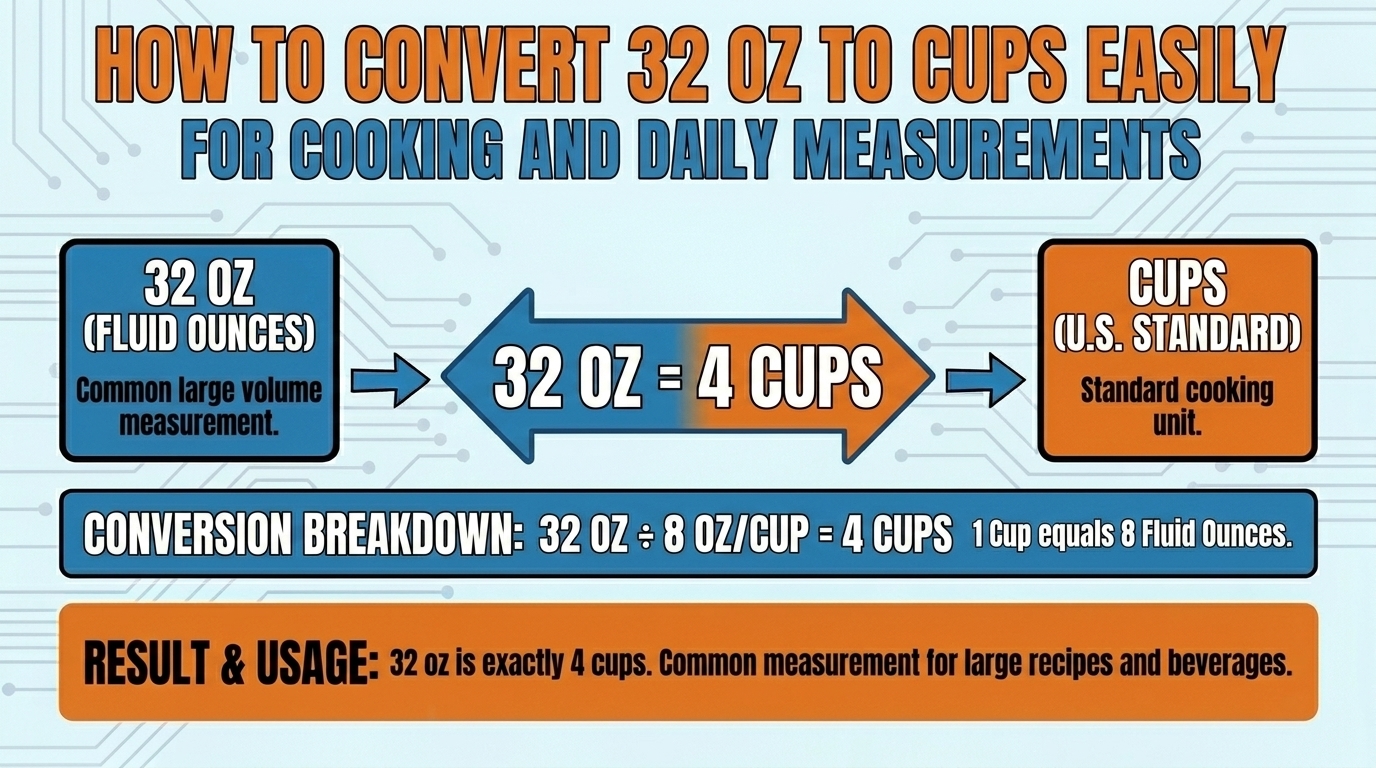
The conversion from 32 oz to cups is simple once the relationship between ounces and cups is understood clearly. In the United States measurement system, one cup equals eight fluid ounces. Based on this standard calculation, thirty-two fluid ounces equal four cups. This conversion is commonly used in cooking recipes, beverage serving sizes, and food preparation instructions. Many kitchen measuring tools display both cups and ounces to make the process easier for users. Understanding this relationship helps people quickly convert measurements without relying on calculators every time. Accurate conversion is especially useful when doubling recipes or adjusting ingredient quantities for different serving sizes during meal preparation at home.
Why Accurate Kitchen Measurements Matter
Accurate measurements are essential for successful cooking and baking because even small differences can affect flavor, texture, and consistency. The 32 oz to cups conversion becomes important when recipes provide liquid measurements in ounces instead of cups. Bakers especially rely on exact measurements because ingredients must combine correctly for proper results. Too much or too little liquid may change the structure of cakes, bread, or sauces significantly. Professional chefs also use accurate conversions to maintain recipe consistency across multiple servings. Understanding basic kitchen conversions improves confidence during food preparation and reduces errors. Measuring ingredients correctly also saves time, prevents waste, and supports better cooking outcomes for both beginners and experienced cooks.
Common Household Uses for 32 oz Measurements
Many everyday household items use thirty-two-ounce measurements, making the 32 oz to cups conversion highly practical. Large water bottles, juice containers, soup cartons, and storage jars often hold thirty-two ounces of liquid. Since this equals four cups, people can quickly estimate serving amounts without additional tools. Understanding this conversion also helps during meal planning and hydration tracking. Some coffee makers and blenders display capacity in ounces, while recipes may use cups instead. Knowing how to switch between these units improves convenience and reduces confusion. This simple measurement knowledge is useful not only in kitchens but also in fitness routines, health planning, and daily beverage consumption management.
Fluid Ounces Versus Dry Ounces Explained
One important detail when discussing 32 oz to cups is understanding the difference between fluid ounces and dry ounces. Fluid ounces measure liquid volume, while dry ounces measure weight. In cooking, liquid ingredients like milk, water, or juice are usually measured in fluid ounces. Dry ingredients such as flour or sugar may require weight-based measurements instead. Confusing these two systems can lead to incorrect ingredient amounts and poor recipe results. Cups are generally used for volume rather than weight measurements in American cooking practices. Understanding the distinction between dry and liquid measurements improves kitchen accuracy and helps individuals follow recipes more effectively without making common conversion mistakes during preparation.
Importance of Conversion Knowledge in Baking
Baking requires precision, making the 32 oz to cups conversion especially valuable for home bakers and professionals alike. Recipes often include liquids like milk, cream, or water in ounces, while measuring tools may use cup markings instead. Since thirty-two ounces equal four cups, bakers can confidently adjust ingredient amounts without affecting recipe quality. Correct liquid measurements influence dough texture, cake moisture, and overall consistency during baking. Inaccurate measurements may cause baked goods to become too dry, dense, or unevenly cooked. Learning simple conversions supports better baking results and improves confidence when experimenting with new recipes. Strong measurement skills also help bakers adapt recipes for larger gatherings or smaller servings.
Measuring Tools That Simplify Conversions
Modern kitchen tools make the 32 oz to cups conversion much easier and more accurate for everyday use. Measuring cups, liquid measuring jugs, and digital kitchen scales often display multiple units to assist with quick conversions. Transparent measuring containers commonly include ounce and cup markings together, allowing users to compare units directly. Digital kitchen scales with liquid measurement functions provide additional convenience for precise cooking and baking tasks. Using reliable measuring tools reduces mistakes and improves recipe consistency over time. Many professional kitchens depend on standardized tools to maintain quality across all dishes. Investing in accurate measuring equipment can greatly improve efficiency and confidence during food preparation activities.
Benefits of Understanding Measurement Systems
Learning conversions like 32 oz to cups offers benefits beyond cooking because measurement systems appear in many aspects of daily life. Health professionals may recommend fluid intake goals in ounces, while people often track beverages using cups. Fitness programs, nutrition plans, and hydration schedules commonly require basic conversion knowledge for accurate monitoring. Educational settings also teach measurement concepts to improve mathematical and practical life skills. Understanding standard conversions helps individuals interpret labels, follow instructions, and communicate measurements more effectively. This knowledge becomes especially useful when comparing products or using international recipes that combine different measurement systems. Strong measurement understanding supports accuracy, efficiency, and better decision-making in everyday activities.
International Differences in Measurement Standards
The conversion of 32 oz to cups may vary slightly depending on the measurement system being used internationally. The United States uses a standard cup equal to eight fluid ounces, making thirty-two ounces equal four cups. However, other countries may use metric cups with slightly different capacities. This difference can create confusion when following recipes from international sources. Understanding which measurement system a recipe follows helps avoid preparation mistakes and ensures accurate ingredient proportions. Many online recipes now include both metric and US measurements for convenience. Awareness of international measurement differences improves cooking accuracy and supports smoother communication between people using different culinary standards worldwide.
Practical Tips for Remembering the Conversion
Remembering the 32 oz to cups conversion becomes easier with regular use and simple mental calculation techniques. Since one cup equals eight ounces, dividing thirty-two by eight quickly produces the answer of four cups. Associating common beverage containers with familiar cup amounts can also help strengthen memory. For example, many large bottles and containers hold approximately four cups of liquid. Repeating conversions during cooking activities naturally improves confidence and speed over time. Some people keep measurement charts in kitchens for quick reference during meal preparation. Developing familiarity with common kitchen conversions reduces stress, improves accuracy, and makes cooking and baking tasks far more convenient and enjoyable overall.
Conclusion
Understanding the conversion from 32 oz to cups is a valuable skill that supports accurate cooking, baking, and daily measurement tasks. Since thirty-two fluid ounces equal four cups, this simple calculation helps individuals prepare recipes confidently and avoid common measurement mistakes. From household beverage containers to professional baking environments, accurate conversions improve consistency and efficiency in many situations. Learning the difference between fluid and dry measurements also prevents confusion during food preparation. As people continue using recipes and products with varying units, strong measurement knowledge becomes increasingly important. Mastering simple conversions like this one can make kitchen tasks easier, faster, and more reliable for everyone.