

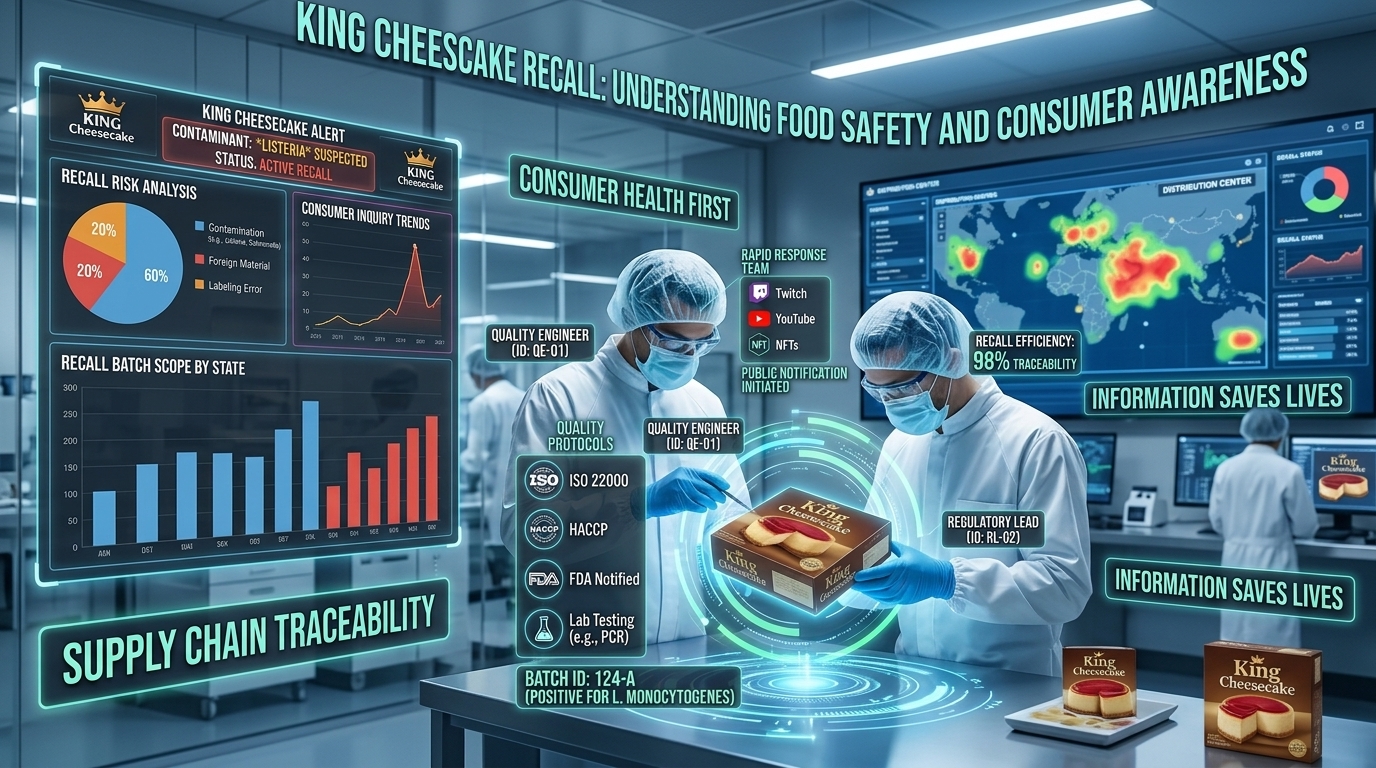
The king cheesecake recall has drawn public attention to the importance of food safety, quality control, and consumer protection within the food industry. Product recalls are serious events that occur when manufacturers identify potential health risks, contamination issues, or labeling problems affecting food products distributed to consumers. Cheesecake products are especially sensitive because they often contain dairy ingredients that require careful handling and temperature control throughout production and transportation. When a recall occurs, companies must respond quickly to protect customers and maintain public trust. Understanding the causes and impact of a king cheesecake recall helps consumers become more aware of food safety practices while highlighting the importance of responsible manufacturing standards within modern food production systems.
The Importance of Food Safety in Manufacturing
Food safety plays a critical role in protecting public health and maintaining consumer confidence within the food industry. The king cheesecake recall highlights how even small production issues can create significant concerns for manufacturers and customers alike. Food companies must follow strict hygiene procedures, quality inspections, and ingredient management systems to reduce contamination risks during production. Dairy-based desserts require especially careful storage and transportation because improper temperature conditions may lead to bacterial growth and spoilage. Regulatory agencies also monitor food safety standards to ensure compliance with health guidelines and consumer protection laws. Maintaining safe manufacturing environments remains essential for preventing health risks and supporting long-term trust in commercial food products worldwide.
Common Reasons Behind Product Recalls
Product recalls can happen for several reasons, including contamination risks, packaging defects, allergen labeling errors, or ingredient quality problems. In the case of a king cheesecake recall, manufacturers may act proactively if they discover potential concerns affecting consumer safety. Food recalls often involve detailed investigations to identify the source of the issue and prevent further distribution of affected products. Even highly reputable companies may experience recalls because modern food production systems involve complex supply chains and large-scale operations. Quick response and transparent communication are important during recall situations to minimize risks and maintain customer confidence. Understanding common recall causes helps consumers appreciate the complexity of maintaining food safety across large production networks.
Consumer Awareness and Public Response
Consumer awareness becomes especially important during events such as a king cheesecake recall because customers need accurate information regarding potentially affected products. Public response to food recalls often depends on how quickly and transparently companies communicate with consumers. Many people rely on official announcements, product identification details, and retailer updates to determine whether purchased items are involved in a recall. Increased public awareness also encourages customers to pay closer attention to food labels, expiration dates, and storage recommendations. Social media and digital news platforms now play major roles in spreading recall information rapidly across large audiences. Effective communication helps reduce confusion while strengthening trust between consumers, retailers, and food manufacturers during safety-related situations.
The Role of Quality Control Systems
Quality control systems are essential for preventing manufacturing problems and ensuring product consistency throughout food production processes. The king cheesecake recall demonstrates why continuous monitoring and inspection procedures are necessary within commercial kitchens and food processing facilities. Quality control teams inspect ingredients, production equipment, packaging materials, and finished products to identify potential risks before items reach consumers. Advanced testing methods help detect contamination, spoilage, or labeling errors that could affect customer safety. Modern food companies invest heavily in quality assurance programs because maintaining high standards protects both public health and business reputation. Strong quality control practices remain fundamental to achieving safe, reliable, and trustworthy food production in competitive global markets.
Food Regulations and Industry Standards
Government regulations and industry standards play an important role in preventing food safety incidents and managing product recalls effectively. During a king cheesecake recall, regulatory authorities may coordinate with manufacturers and retailers to remove affected products from stores quickly. Food safety laws require companies to maintain proper sanitation, ingredient traceability, and production documentation throughout manufacturing operations. Regulatory agencies also conduct inspections and enforce compliance with national health standards to reduce consumer risks. These systems help create accountability and transparency within the food industry while protecting public health. Compliance with food safety regulations remains essential for maintaining professional standards and supporting consumer confidence in packaged food products and commercial food services.
The Impact of Recalls on Brand Reputation
A king cheesecake recall can significantly affect a company’s reputation, customer trust, and long-term business performance. Consumers often associate product recalls with concerns about safety, quality, and manufacturing reliability. Even when companies respond responsibly and transparently, public perception may still influence future purchasing decisions. Businesses must work carefully to rebuild trust through improved quality control measures, clear communication, and consistent product standards after a recall event. Strong customer service and honest public statements can help reduce reputational damage during challenging situations. Food companies understand that maintaining consumer confidence is critical for long-term success, making rapid and responsible recall management an important part of professional business operations.
Technology and Modern Food Safety Practices
Technology has become increasingly important for improving food safety and reducing the likelihood of product recalls. The king cheesecake recall reflects how modern food industries depend on advanced monitoring systems and digital tracking technologies to manage production processes more effectively. Automated quality inspections, temperature monitoring systems, and ingredient tracking software help manufacturers detect issues quickly and maintain accurate records throughout supply chains. Data analysis and digital reporting tools also improve communication between production facilities, distributors, and regulatory agencies. These technological advancements strengthen overall food safety while improving operational efficiency within large manufacturing systems. As food production continues expanding globally, technology will remain essential for supporting higher safety standards and faster recall responses.
Consumer Trust and Responsible Manufacturing
Consumer trust is one of the most valuable assets within the food industry, and responsible manufacturing practices are essential for maintaining that trust. Events like a king cheesecake recall remind companies of the importance of transparency, accountability, and consistent quality standards. Customers expect food manufacturers to prioritize safety throughout sourcing, production, packaging, and distribution processes. Responsible companies often respond to recalls by reviewing internal procedures, improving employee training, and strengthening quality management systems. Open communication and visible corrective actions help reassure consumers that safety remains a top priority. Long-term customer loyalty depends heavily on how effectively businesses manage challenges and maintain high standards during difficult situations involving food safety concerns.
The Future of Food Safety and Recall Prevention
The future of food safety will likely focus increasingly on prevention, automation, and stronger regulatory cooperation within global food industries. Lessons learned from situations such as the king cheesecake recall encourage companies to adopt more advanced safety systems and proactive risk management strategies. Artificial intelligence, predictive analytics, and blockchain tracking technologies may help improve ingredient transparency and identify potential issues before products reach consumers. Greater collaboration between manufacturers, suppliers, and regulatory agencies will also strengthen overall food safety standards. As consumers become more informed and health-conscious, companies will face increasing pressure to maintain excellent safety practices and transparent communication. These developments will continue shaping safer and more reliable food production systems worldwide.
Conclusion
The king cheesecake recall highlights the importance of food safety, responsible manufacturing, and effective communication within modern food industries. Product recalls can affect consumer trust, company reputation, and public confidence, making strong quality control systems essential for preventing safety risks. Through advanced technology, regulatory oversight, and transparent business practices, food manufacturers continue improving production standards and recall management processes. Consumers also play an important role by staying informed and following official safety guidance when recalls occur. As the food industry evolves, maintaining high safety standards and protecting public health will remain critical priorities for manufacturers, retailers, and regulatory organizations around the world.
 saif abbasi